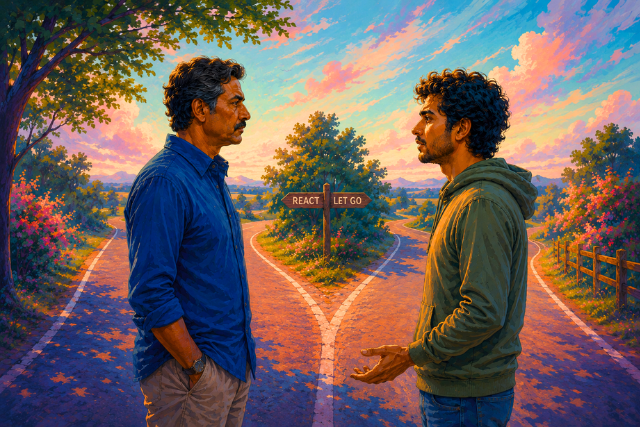

“Between stimulus and reaction there’s a area. In that area is our energy to make a choice our reaction.” ~Viktor E. Frankl
A couple of months in the past, I used to be on a crowded freeway with my spouse and son. Visitors used to be slightly transferring. Cars have been inching ahead, one small hole at a time, with the standard impatience placing within the air.
All at once, there used to be a noisy bang. It seemed like one thing had burst.
For a 2d, I didn’t perceive what had came about. Then I noticed a motorcyclist looking to squeeze throughout the slender area between automobiles had hit us. His facet bar had torn into our rear tire, and he had fallen onto the street.
We stepped out straight away. We have been all shaken. The motorcyclist used to be getting up, visibly startled.
My first response used to be anger.
We had already been caught in that visitors jam for over an hour, and now there used to be a broken tire to handle in the course of it. The inconvenience, the carelessness, the surprising disruption—all of it got here in combination in that second.
However one thing sudden came about.
My son used to be riding, and I may sense the strain in him. The motorcyclist walked up, apologized, and presented to pay a small quantity for the wear. It used to be obviously now not sufficient, and underneath other instances, we may have argued.
I may have reacted very otherwise. Raised my voice, wondered his carelessness, and insisted on repayment proper there at the highway.
It would simply have became a controversy, drawing consideration and including to the chaos round us. And it could have best added to that rigidity.
As a substitute, we centered at the instant downside. Converting a tire in that roughly visitors used to be now not conceivable. Vehicles have been packed too intently, and there used to be no area to do it safely.
So we made a difficult resolution. We drove on.
For just about two kilometers, we moved in moderation on a broken tire, the automobile unsteady, the sound of it reminding us of what had simply came about. Sooner or later, we discovered a small roadside tire store and were given it changed.
All of the episode set us again by means of virtually two hours.
For some time, there used to be nonetheless rigidity. We had already been aggravated earlier than the incident, and this had best added to it. However as we were given again at the highway, one thing shifted.
We discovered ourselves speaking in most cases once more. We stopped for a scrumptious lunch and, virtually with out noticing, started to revel in the remainder of the adventure.
Later, I considered how simply that second may have long gone otherwise.
We may have argued with the motorcyclist. We may have held directly to the anger, replaying the incident in our minds. It wouldn’t have modified what had came about. The tire would nonetheless have wanted to get replaced. The lengthen would nonetheless were there.
However it could have modified the remainder of the day.
Once in a while, now not reacting isn’t about being calm or affected person in a planned means. It’s merely about seeing obviously what the placement wishes.
In that second, what we would have liked used to be now not a controversy. It used to be an answer.
The anger got here, nevertheless it didn’t keep. And as it didn’t keep, it didn’t take the rest extra from us than it already had.
That small distinction modified the revel in of all of the day.
It jogged my memory that we regularly lift moments longer than important, turning them over in our minds, permitting them to form what comes subsequent.
However occasionally, we will be able to allow them to go.
No longer as a result of they don’t subject, however as a result of maintaining directly to them does now not assist.
And once we do this, even an extraordinary day that in brief went mistaken can to find its long ago once more.

About Ashok B. Heryani
Ashok B. Heryani writes reflective essays on on a regular basis existence, exploring human conduct, social patterns, and the quiet forces that form how we are living and relate to each other.